
WHY AUTHENTICITY MATTERS—AND HOW AI CAN LIMIT YOUR BOOKINGS

If you don't give travelers an experiential picture of your space, your viewers will lack the framework to imagine themselves in your space.
When I began introducing my Airbnb network to the concept of experiential marketing, lightbulbs started going off for so many hosts. Hey there, I’m Dawn. Over here at The Olive Jar, our vacation rental marketing approach is guided by your traveler’s desire to experience your rental like it’s their very own. Inviting them into that experience starts with story-driven imagery.
Today, what I have to share may not be popular at the moment. But I’m writing from a place of heartfelt care to support your 5-star hospitality—starting with the first moment travelers lay eyes on your property.
If you’re a business owner, then you’re keen to the learning curve brands have undergone in the last decade earning consumer trust. All that “authenticity” buzz wasn’t just a phase.
Brand integrity. Real experiences. Emotional connection.
But today, when it comes to the hospitality sector, there’s a new kind of shortcut making its way into short-term rental marketing.
Not better lighting.
Not better styling.
Not even better editing.
I’m talking fabricated moments. (Maybe my subject line gave it away?)
Before you feel judged — this isn’t that kind of post. AI tools are powerful. I use them. They’ve supported remote hosting in many ways, from research to automation. When it comes to design, I’ve just completed a set of design mockups for a client using AI—as many designers do.
This article is about your Airbnb listing photography and other traveler-facing platforms.
TO BE CLEAR: This isn’t about light retouching or removing a smudge on the wall. It’s not even about placeholder images—like when you’ve added a new piece of decor to a space, but you’ll wait for another round of photography after you’ve completed more property updates. In the meantime, you’ve *skillfully* updated an existing property image with that new throw pillow.
This article is about AI-generated wine & cheese scenes, imaginary guests, and golden-hour skies that feel more cinematic than credible.
Your use of AI may be a sincere effort to inspire your traveler (if that’s you, I hear you!)…But in a hospitality industry built entirely on trust and emotion, we have to ask the most pressing question:

How does photo fabrication impact your bookings?
3 WAYS AI IS HURTING YOUR BOOKINGS
(AND WHAT YOU CAN TRY INSTEAD)

AI GENERATED. An Airbnb image found on Pinterest.
1. AI CREATES GENERIC
AND YOUR PROPERTY CAN’T AFFORD GENERIC
If you’re a host who’s created a wine & cheese shot with AI, I’m sure you had the best intentions to inspire your future guest. It’s not that the scene doesn’t reflect a real moment—but it’s become more of a trend by now, white noise that won’t make your property stand out.
And you can’t afford to be white noise in a competitive landscape.
When those scenes are AI-generated, they become even more diluted—because they’re not rooted in your space, your light, or your brand.
You’re essentially outsourcing your differentiation.
Even when trying to generate never-before-seen moments, AI can only create from captured moments that already exist.
HAVE YOU TRIED TO EXPERIMENT?
WE HAVE.
I’ll illustrate this generic content challenge with my own experiment I conducted.
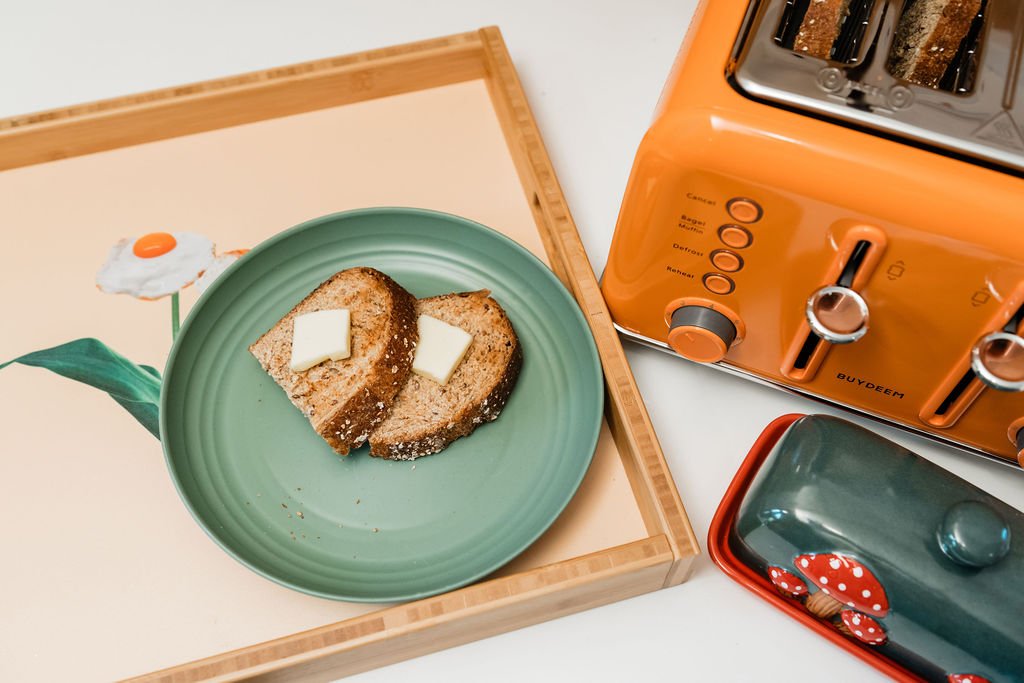
NOT CREATED WITH AI. An Olive Jar client listing image styled and photographed onsite.
For one of our client properties, Camp Kindred, we styled a simple but colorful breakfast moment to reflect the brand’s quirky personality.
We kept it simple with buttered toast, elevated by Camp Kindred’s funky vintage toaster and decorative mushroom butter dish—reinforcing the color palette and motif we established in the design phase.
Real butter. Real toast. And real hands that made it.
THE EXPERIMENT
I turned to ChatGPT for help recreating this scene without sharing the image above.
I fed ChatGPT exact product images of the two kitchen items you see here, which are actually offered at Camp Kindred: the vintage orange toaster and mushroom butter dish.
After 25 minutes, I was frustrated and had nothing to show. So I outsourced the job to my husband. Even with his skilled experience navigating AI, what his five minutes produced wasn’t exactly 5-star getaway worthy—but it was comical:

The final “flashy” shot makes me laugh every time.
Distorted. Unrealistic. One version void of emotion, the other hysterically emotional.
Recap of our trial: We asked AI to create something new. 30 minutes wasted. ResultS? Unusable content.
HOT TAKE:
The time you spend fabricating a standout moment is better spent discovering the real magic already happening in your home.
The creators who showcase that magic best are photographers and stylists experienced in capturing organic moments—realistic, inspired, and full of feeling.
TRY THIS:
Find your secret sauce. Food styling doesn’t need to be elaborate—its purpose is to create sensory moments that bring your brand story and hospitality to life.
Capture simple, enticing food scenes that spark experiences your viewer hasn’t dreamed of yet—but now can imagine inside your property.
The scene should feel familiar enough to be attainable, yet special in how it highlights what makes your kitchen, dinnerware, or amenities different from the neighbor next door.

AI-GENERATED. NOTE: This is another Olive Jar client property image *NOT BEING USED IN THE WORLD* —at The Shack in Basye, VA, we styled and photographed this hot tub onsite with those Birkenstocks, lantern, twinkle lights—those are all real.
BUT, today as another experiment, I added that couple in Google Gemini. NOTICE: Home dude & home girl are experiencing a clear missed connection: she’s in her own world while he’s all creepy looking straight into her resting eyes (or, is he looking off slightly? Either way, it’s weird); they’re disproportionately small; and as a general note, this scene reads like an infomercial.
2. AI-GENERATED MOMENTS ERODE TRUST
IN A TRUST-BASED INDUSTRY
Let’s take a step back.
Photographers have touched up images in Photoshop for years—this isn’t new. But when you see a glossy property image, it reads “enhanced.”
we have crossed over into another realm with AI-generated people appearing in Airbnb photography.
I’m watching hosts fabricate human subjects into hot tubs. And sometimes, they look real…until you notice…something’s off. That hot tub image you see? As another experiment, I added the couple with Google Gemini. *For the record, my client is NOT using this image* But as an exercise, take a another peek—can’t tell what/ who the man is looking at, they’re both too small for their surroundings, and…it just looks cheesy! Also, QUICK TIP: never encourage use of breakable drinking glasses near water features—it’s dangerous.
And this was a decent render.
Most times, these human additions look completely unreal. Have you seen an AI hand reaching into frame holding that same glass of wine we talked about earlier? Those adult hands often look oddly young with perfection—almost glowing.
I’ve always loved the Super Bowl—for the commercials, of course. This year, so many ads used AI human subjects that I couldn’t believe my eyes. Whether the ad was comical or dramatic, the moment we spotted fake people, all feeling disappeared. We instantly lost interest.
If you think viewers aren’t scrolling your listing like it’s a 30-second commercial, you’re forgetting how travelers shop for vacation rentals: like it’s a story they can step into.
The stories that hook us successfully suspend disbelief to immerse us in a believable world.
But the uncanny valley of current AI does the opposite—it creates disbelief. It over dramatizes the moment (or it’s just weird, no further explanation necessary). Why does this matter?
1) An emotional connection TO YOUR STR BRAND can’t form through a disconnected experience. 2) That friction breeds distrust.
This is where trust quietly erodes. In hospitality, do you really want to risk that?
AI fabrication subtly shifts your message from:
“This is the high-touch experience you’ll get.”
to…
“This is what I wish you’d experience, but I can’t actually guarantee.”
***
Travelers aren’t buying square footage. They’re buying expectation.
They’re anticipating a real experience on the other side of the scroll.
And if the marketing moment never existed, you’re not enhancing it.
You’re manufacturing it.
Plus, asking your traveler to excuse the fake stuff. Yikes. That’s a lot to put on them.
HOT TAKE:
Offer your traveler a new kind of luxury.
In a travel world obsessed with high-touch experiences (but exhausted by guessing games), authenticity has become a luxury.
TRY THIS:
Overly staged guest scenes can make listing photos feel forced.
Instead, illustrate human presence subtly (through a hand, distant figure, or thoughtfully placed props) that hint someone was there—for the purpose of drawing attention to the amenities that will enhance the guest experience (lantern, soft pool towels, patterned floor mat).
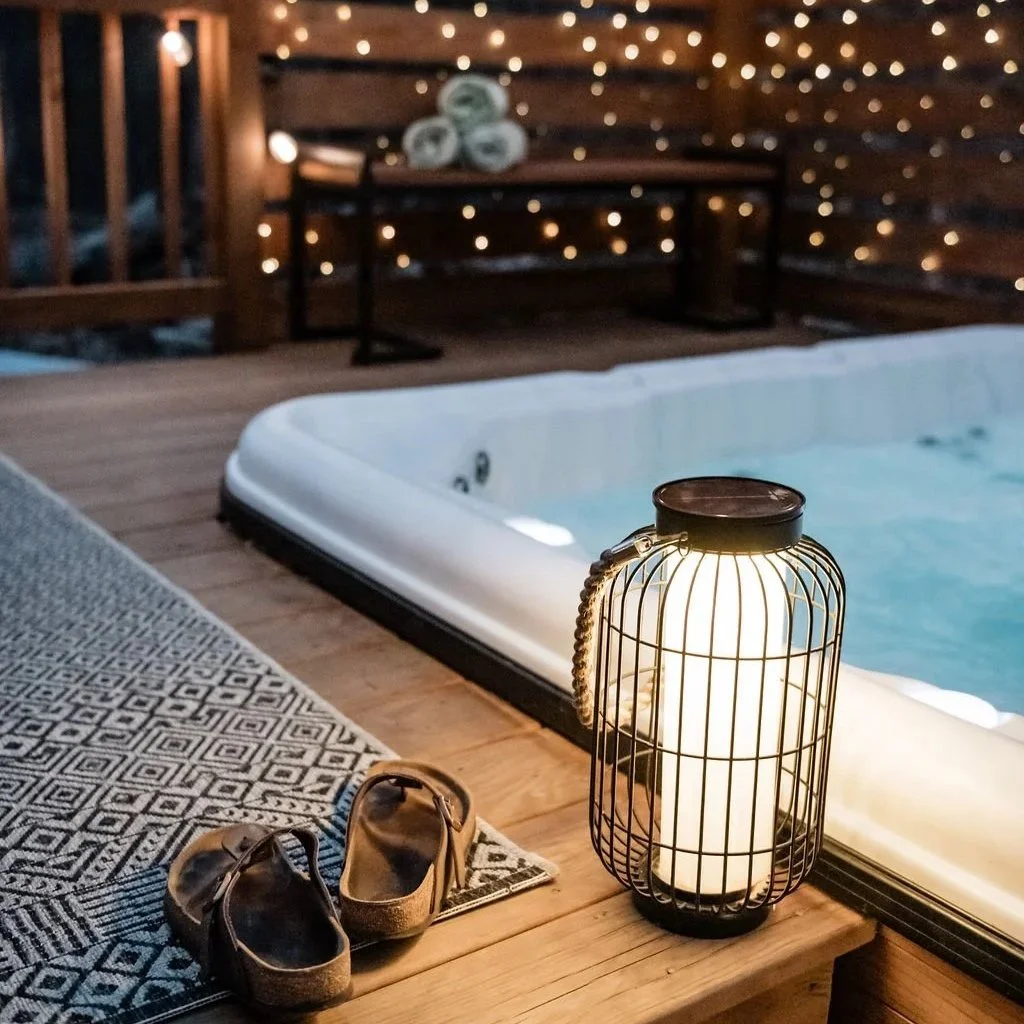
Leave storytelling space for your guest’s imagination.
And if you want authentic lifestyle moments with real travelers, partner with influencers who naturally bring personality to the scene.
3. REMOTE HOSTING SHOULDN’T FEEL DISTANT
I’M TALKING ABOUT EMOTIONAL DISCONNECTION
The first two points illuminate my third.
My real concern isn’t image quality. It’s the loss of personal touch.
I’ve shown you Airbnb imagery that achieves authenticity. Now me illustrate with a different medium: STR blogging & newsletters.
We’ve seen how AI has impacted writing—from novels to social media captions. Readers can spot a ChatGPT copy-paste job because it feels generic (ref: point #1) and untrustworthy (ref: point #2).
I admire one STR host who recently posted a Substack entry titled “Not a ski trip—still a great trip.”
She opened with transparency: normally her calendar is booked solid at this time of year, but the ski conditions weren’t ideal. Instead of convincing her readers it’ll still be a great time as is, she invited travelers to see the snow differently: through activities like snowshoeing, horse sleigh rides, and ice cave spectacles.
BOTTOM LINE: She expanded our perception of a magical snowy getaway.
THE MESSAGING: Never lose your sense of wonder—with the people you love. You can find it right here at D|B Dens.
HOT TAKE:
Don’t let your marketing be the first place your presence disappears.
The hospitality industry is already scaling quickly and losing human touch. Remote hosting shouldn’t feel distant from your care and intentionality.
TRY THIS:
Tailor every element of your offering to deliver a transformational experience rooted in real human care.
Show up like an Open Book Host—don’t know what I mean? Find out HERE.
And when you can’t personally showcase your property, partner with influencers who can—making sure they’re aligned with your audience, not just their follower count.

P.S. I’VE GOT 3 QUESTIONS YOU CAN ASK YOURSELF
Before you use AI to create a scene in your property, try asking yourself:
1) Have viewers seen this moment a hundred times already?
2) Could real props and real people tell a stronger story?
3) Am I expressing what’s true to my hospitality—or compensating for what I haven’t yet developed?
In an increasingly automated hospitality industry, your human presence is your competitive advantage.
Protect it.
Your guests aren’t craving perfection.
They’re craving something real.
BY THE WAY, IF you’re going to invest in your marketing, invest in someone who can capture an inspired experience, not invent it.
Want to work with us?